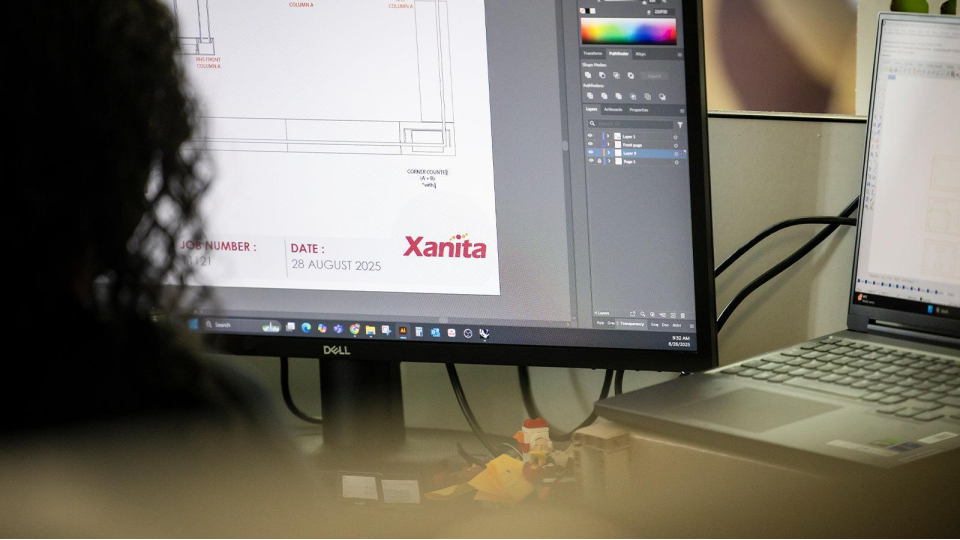
EGF Meet the Member: Xanita is giving brands, designers and stand builders another way to think about the materials behind temporary exhibition and event infrastructure.
Great exhibition and event experiences depend on thousands of decisions, many of which delegates never see.
One such decision is material choice.
The materials used to create exhibition stands, displays and brand environments influence everything from transport and installation to reuse, recycling and what happens at the end of their useful life.
This is where Xanita, a proudly South African manufacturer of engineered fibreboard, is helping stand builders, designers and brands explore more circular approaches to temporary event infrastructure.
Designing for what comes next
Many South African stand builders already extend the life of exhibition infrastructure through modular systems, reusable frames and fabric graphics. In many cases, this makes good business sense as well as reducing waste.
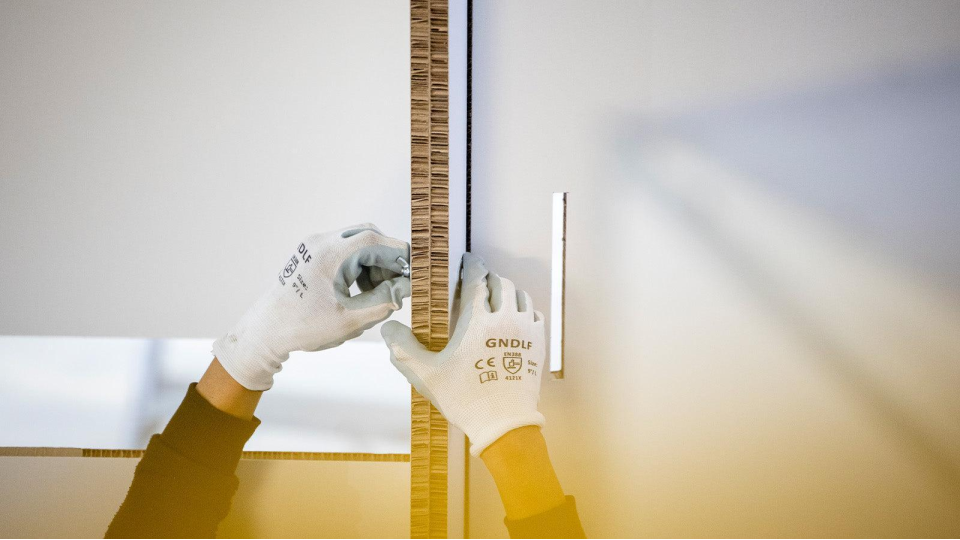
Xanita’s approach complements these existing practices, offering a lightweight, paper-based board for custom-designed exhibition stands, panels to fit into aluminium systems, counters, furnishings and signage.
The board can be reused where appropriate and, when it eventually reaches the end of its useful life, returned to the paper recycling stream through repulping.
“Our approach is to think about what happens to a material at the end of its useful life, not just how it performs at the event,” explains Rowan Maher, Chief Marketing Officer at Xanita.
The company’s engineered fibreboard is designed to deliver the strength and finish required for exhibitions, events and retail displays, while offering a different end-of-life pathway to many traditional materials.
For brands, this creates an opportunity to consider sustainability alongside the other practical requirements of an event: visual impact, durability, logistics, installation and cost.
Material specification can also become part of a broader sustainability and ESG conversation — particularly when procurement teams need to understand where materials come from, how they are transported, how they are used and what happens to them afterwards.
Lighter materials, lighter logistics
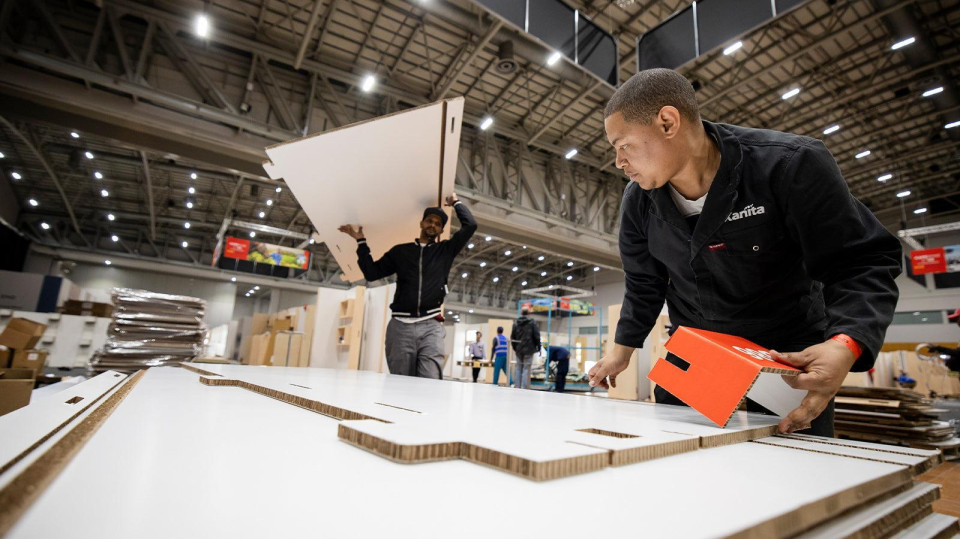
Xanita’s boards are lightweight and designed to pack flat, making them easier to transport and handle.
Fast installation that doesn’t require tools is another advantage, particularly when working to tight exhibition build schedules.
And because the material is manufactured in South Africa, Xanita offers a locally produced option for an industry where materials and finished products can otherwise travel significant distances.
Proven at scale
These aren’t simply theoretical benefits.
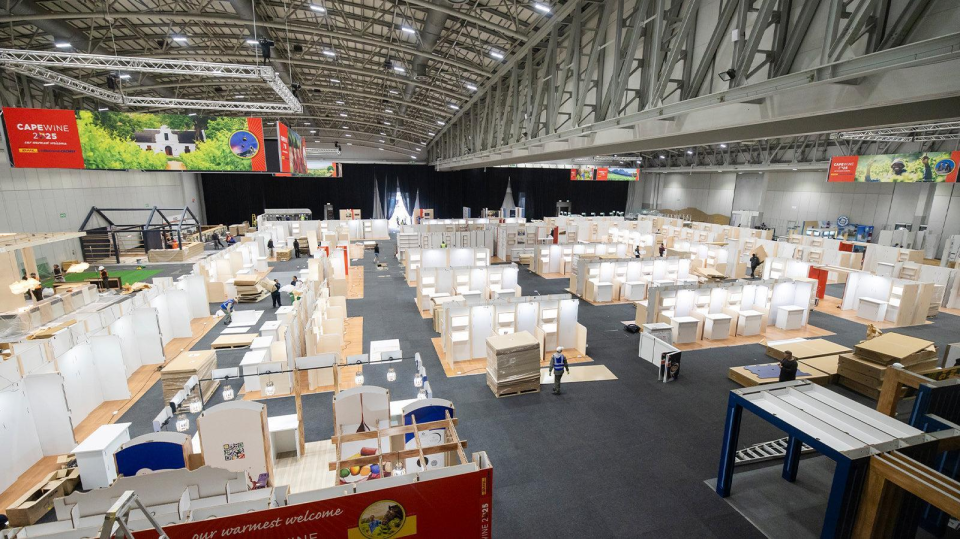
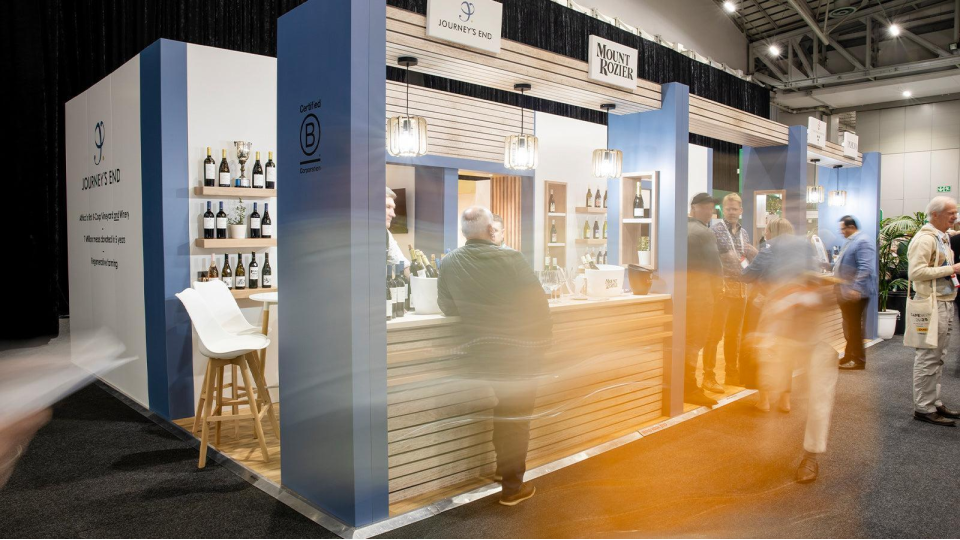
At Cape Wine 2025, South Africa’s largest wine trade exhibition, Xanita designed and manufactured most of the exhibition infrastructure, using more than 5,000 engineered fibreboard panels to create custom and modular stands. (Read the Cape Wine 2025 case study here.)
The lightweight, flat-pack approach enabled efficient logistics and fast installation. After the event, components were either reused for future events or returned to the paper recycling stream through repulping.
And this wasn’t Xanita’s first Cape Wine.
The company has delivered the exhibition for five consecutive editions since 2012, demonstrating that different material choices with potential sustainability benefits can meet the practical demands of a large-scale exhibition.
Sustainability without compromising the experience
One of the biggest misconceptions about sustainable events, says Maher, is that sustainability means compromising on quality or creativity.
“Today’s materials and technologies make it possible to deliver premium visitor experiences while dramatically reducing environmental impact,” he says.
For Xanita, the goal is to encourage designers, stand builders, organisers and brands to think about the whole lifecycle of the materials they specify.
That means considering what happens before the event, during the event and — importantly — after it.
A more circular approach
Xanita would like to see greater collaboration across the events supply chain, with organisers, designers, contractors and recyclers working together to make circular design easier to implement.
And for brands, that conversation can start with a simple question:
What will happen to our event materials when the event is over?
Because a more sustainable event isn’t necessarily about choosing the newest or “greenest” product.
It’s about making informed choices that balance performance, practicality and environmental impact — and designing for what comes next.
Interested in exploring alternative material options for your next exhibition, activation or brand experience?

Connect with Xanita to learn more.
Facebook: @XanitaInside
Instagram: @xanita_inside
YouTube: @Xanita
LinkedIn: @Xanita
Website: xanita.com
QUICK FIRE WITH XANITA
One word associated with sustainable events?
Circularity
One small change that makes a big impact?
Specify recyclable materials from the start.
One thing the industry needs more of?
Collaboration
QUESTIONS TO ASK WHEN SPECIFYING EVENT MATERIALS
Choosing materials for your next exhibition stand or event? Don’t just ask what something looks like or costs. Ask what happens across its lifecycle:
- Where was it manufactured?
- How far does it need to travel?
- Is it lightweight and efficient to transport?
- Can it be reused for another event?
- Can it be installed and dismantled efficiently?
- Can it be adapted or reconfigured?
- If it can’t be reused, is a clear recycling pathway available?
- Can your supplier provide information to support your ESG reporting?
The goal: Choose materials that perform well today — and have a clear plan for what happens tomorrow.
